Berlin boat tours
The River Spree: Facts, Route & Can You Swim In It?
By The Berlin Boat Tours Editorial Team ·
On this page
Before you cruise it, here is a little about the river itself. The Spree is the waterway that made Berlin. The city literally grew up around a crossing point on it. This guide answers the common questions about the Spree: where it starts and ends, whether you can swim in it, and whether you can walk its banks.
Ready to get on the water? See our Spree river cruise guide.
Where does the Spree river start and end?
The Spree rises in the Lusatian hills of Saxony, near the Czech border, and flows about 400 kilometres north-west, ending where it joins the Havel in Berlin-Spandau. Along the way it winds through the Spreewald wetlands and then the heart of Berlin.
So the river you cruise in the city centre is just one stretch of a long journey across eastern Germany.
Can you swim in the Spree in Berlin?
In central Berlin, no. The inner-city Spree carries boat traffic, and its water quality is not meant for swimming. Berliners head instead to the Havel lakes like Wannsee and Tegel for a proper swim.
There is a long-running project to make a stretch of the Spree swimmable again, but it is not there yet. For now, keep the swimming to the lakes.
Can you walk along the Spree in Berlin?
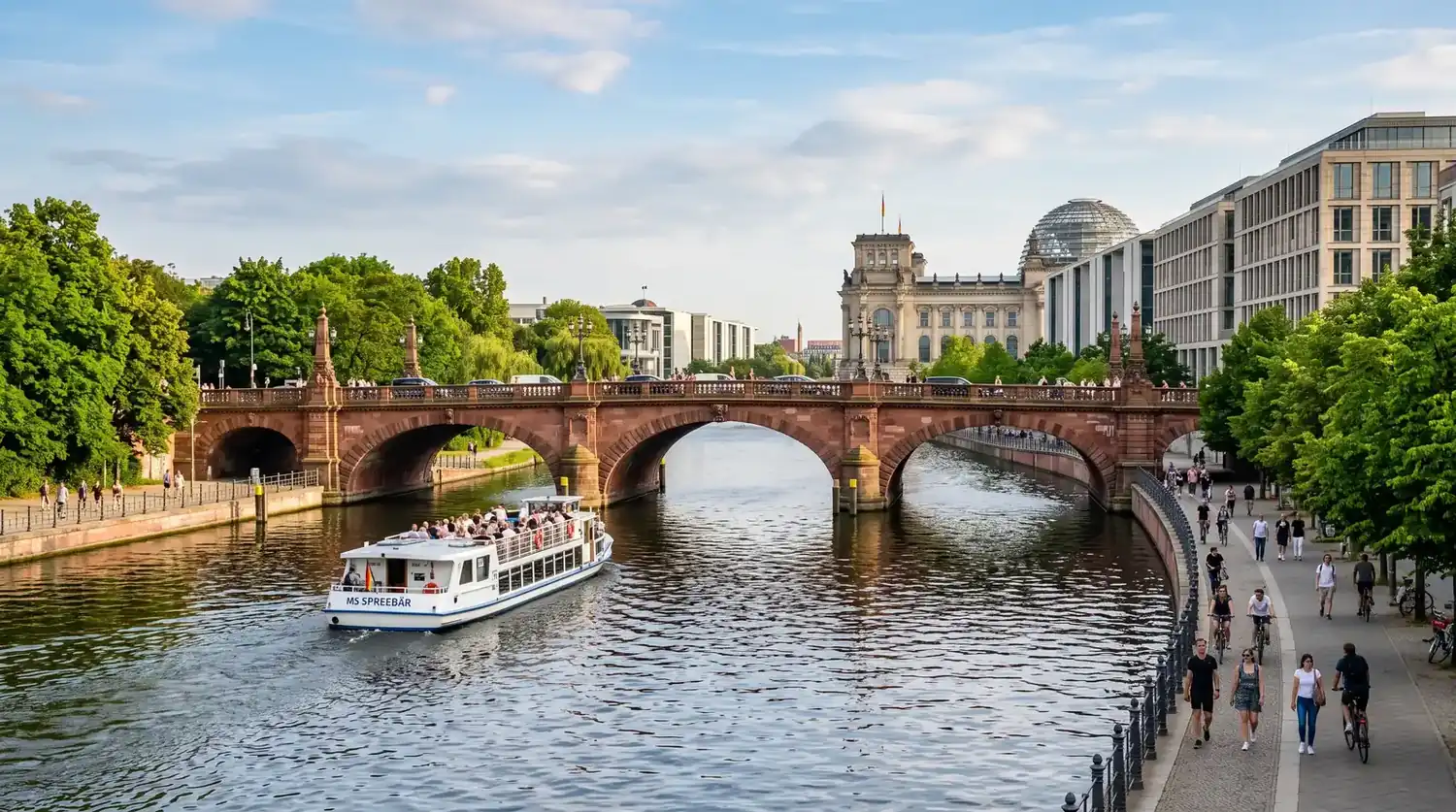
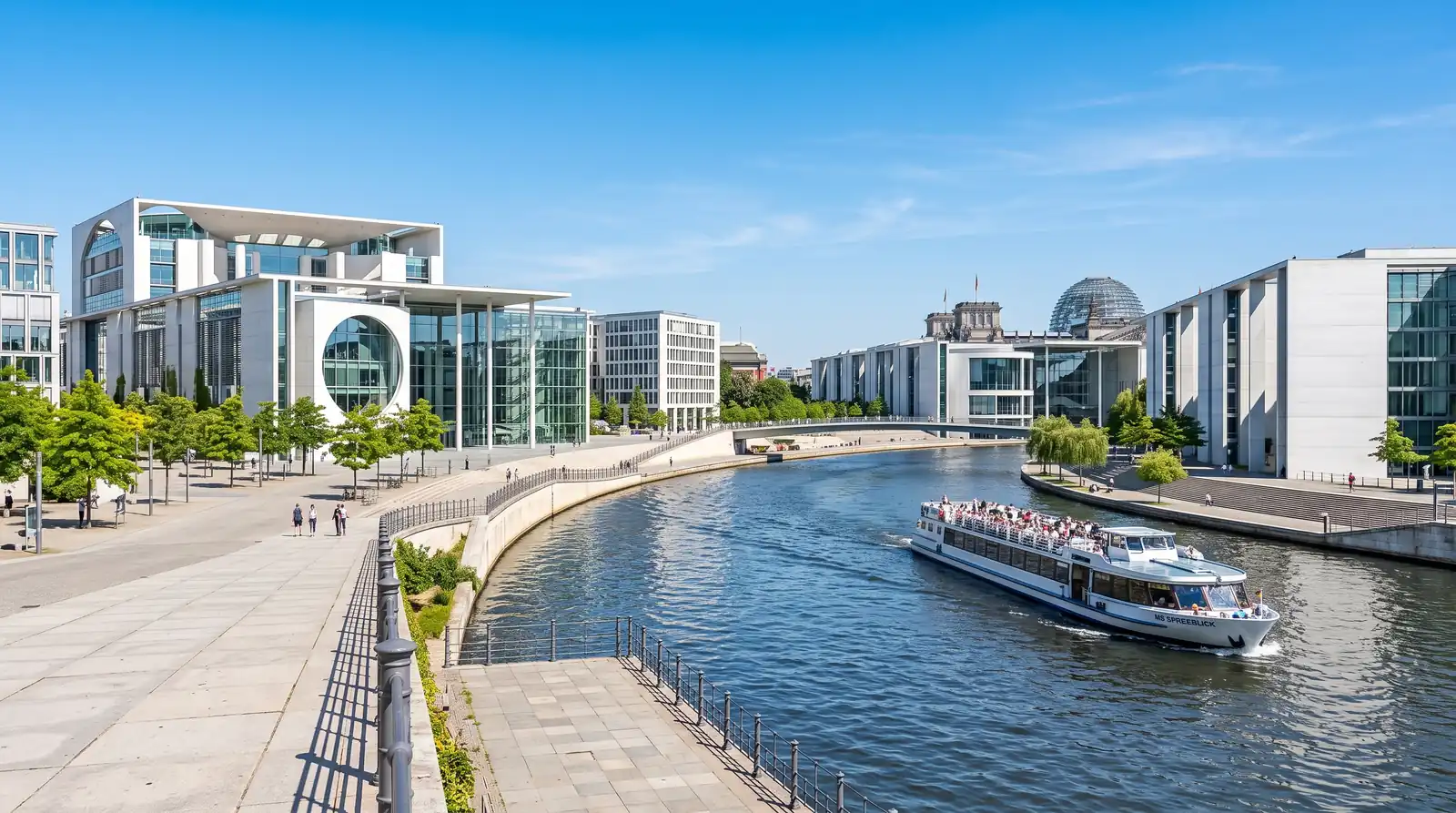
Yes. Long riverside promenades follow the Spree through the centre. The stretches around Museum Island, the government quarter and the East Side Gallery are all walkable and make a good pairing with a cruise.
Walking one bank and cruising the other is a lovely way to see the river from two angles. Our route and landmarks guide shows what lines the banks.
Why is the Spree perfect for cruising?
Because the Spree runs straight through the historic core, a boat gives you a moving front-row seat to the city’s landmarks. In one hour you pass the Reichstag, Museum Island and the Cathedral, all from the water.
That is why Spree cruises are so popular. The river does the sightseeing for you, no walking required.
A few more Spree facts
The Spree is unusually slow-moving and flat, which is part of why Berlin has so many bridges and canals branching off it. The Landwehr Canal is one such branch, looping south through Kreuzberg. The river also feeds the lakes and waterways that spread west toward Potsdam.
All of this makes Berlin one of Europe’s most water-rich capitals, with more bridges than many people expect.
See the Spree for yourself
The best way to understand the Spree is from its surface. Check live prices and times on the booking widget, then pick a cruise. Browse them all in our all boat tours section.
Group fare estimator
A quick estimate of what a Berlin boat tour might cost your group. Adults pay the “from” fare; children are estimated at half. Always check the live price before booking.
Estimate only · not a quote · child pricing varies by operator.
Frequently asked questions
Where does the Spree river start and end?
The Spree rises in the Lusatian hills of Saxony near the Czech border and flows about 400 km north-west, ending where it joins the Havel in Berlin-Spandau.
Can you swim in the River Spree in Berlin?
Swimming in the central Spree is discouraged due to water quality and boat traffic. Berliners swim in the Havel lakes such as Wannsee instead.
Can you walk along the Spree in Berlin?
Yes. Long riverside promenades follow the Spree through the centre, especially around Museum Island, the government quarter and the East Side Gallery.
How long is the River Spree?
The Spree is about 400 kilometres long, flowing from the hills of Saxony through the Spreewald and Berlin before joining the Havel in Spandau.
Why does Berlin have so many bridges?
The Spree is slow and flat, with many canals branching off it, so the city grew a dense network of waterways and hundreds of bridges to cross them.